










As the weather has chilled and the spooky vibes have returned, a lot of people began settling into their Halloween spirit. However, despite the large amount of Halloween fans there are out there, the average age of trick-or-treaters continues to decline each year. There is no doubt that some kids still love dressing up and receiving candy, but what began to shift children’s views on trick-or-treating?
A lot of factors can contribute to making families feel as if their kids, or themselves, should no longer go trick-or-treating. There is noticeable societal pressure in earlier years due to issues like social anxieties, school work, age and especially in 2020, COVID-19. Although all of these certainly come with their own obstacles on the night of Halloween, the one that is believed to have the strongest impact on trick-or-treaters is the era they are currently in, thus causing the maximum age of trick-or-treating enthusiasts to be younger and younger each year. Madison Enrique, 11, is one who credits the decrease in trick-or-treaters to their growing up.
“As kids get older, they trick-or-treat less because people think they’re too good to trick-or-treat,” Enrique said. “Then fairly more people are more interested in parties and doing stuff with their friends, rather than going around and trick-or-treating. But I like trick-or-treating, and I think people shouldn’t feel ashamed to trick-or-treat.”
Along with progressing through life, location can effect the traction of Halloween. Neighborhoods with younger kids may have a good amount of trick-or-treaters, but communities with older teenagers may not spend much time out fishing for candy. Spanish teacher Emily Ewald believes that once more and more families begin to stop trick-or-treating, it can spread throughout the entire region.
“You just have to go to a certain neighborhood,” Ewald said. “One neighborhood’s just going to have a certain lifetime. Their kids are going to grow up, and so they’re not necessarily going to if there’s not younger families there that have all the kids to trick-or-treat.”
Contrary to the neighborhoods that tend to be antagonistic towards Halloween, there are still several locations that seem to enjoy the spooky spirit.
“We go trick-or-treating in this neighborhood called New Town in St. Charles and it’s just like everybody is out on their front porch, all the houses are decorated and everybody is having a good time,” Ewald said. “They’ve got little fire pits and there’s just droves and droves of people.”
A fraction of the dislike behind Halloween isn’t always just about the horror movies and haunted houses, sometimes it can be real danger. For instance, A lot of unsupervised kids may be less aware of incoming cars driving down the road.
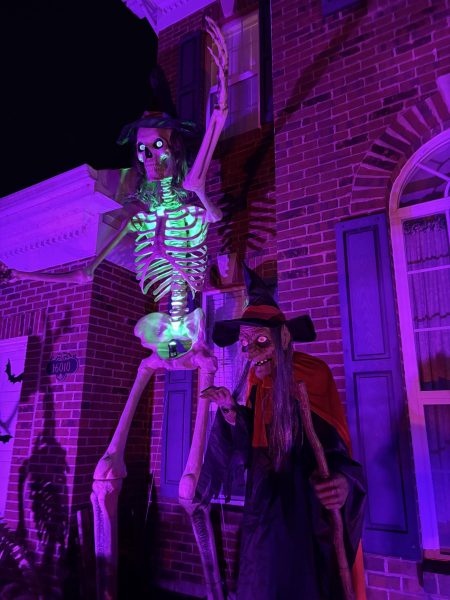
In addition to street traffic, there is an urban legend called “The Halloween Candy Scare”, where it was believed that candy given out to kids could be poisoned or contain unknown drugs. When considering these frightening aspects of Halloween, parents might be scared out of letting their children trick-or-treat.
“Commonly, kids will be unsupervised while they’re trick-or-treating,” Mars Corbett, 11, said. “Just taking candy from random people in random houses could definitely be unsafe.”
Even though there can be some fears caused by this holiday, there is still a way to enjoy it when staying safe and alert. Not only having a parent or adult nearby to supervise would help, but simply for kids and teenagers to have an urgency to keep their wits about themselves could end up being life saving.
“I think as teenagers get a little older, there’s a propensity for them to potentially get into mischief out on a night if they’re out on their own unsupervised,” Ewald said. “I think as long as kids are with their parents, there’s not as much of a danger.”
No matter the age, everyone should be able to relish in the thrill of Halloween. Whether that involves trick-or-treating, hanging out with friends or even just watching horror movies at home, Halloween is a fun holiday that all are welcome to enjoy.
“People have the idea that since we’re getting older we shouldn’t trick-or-treat, but I don’t think that should be normalized,” Enrique said.